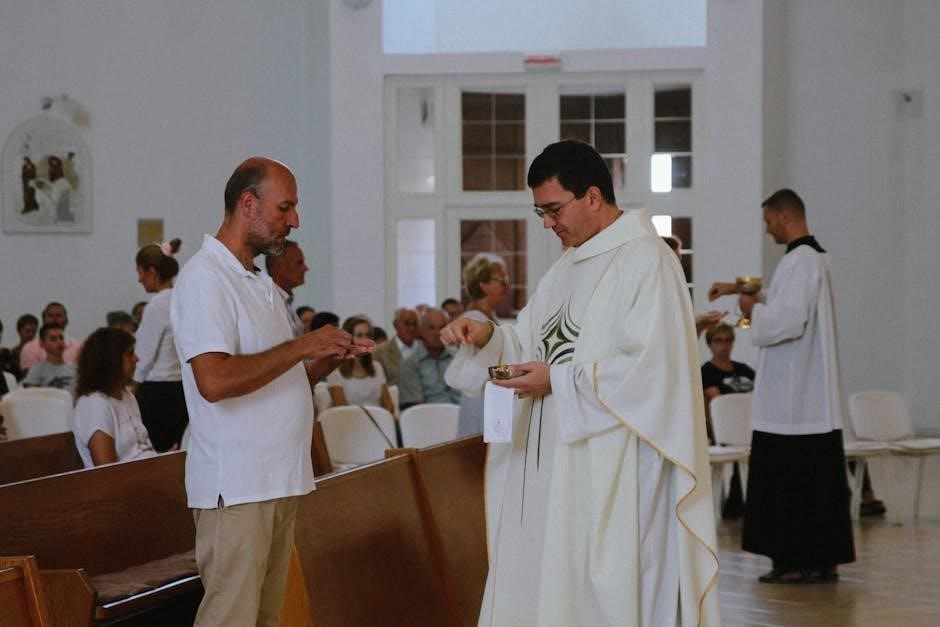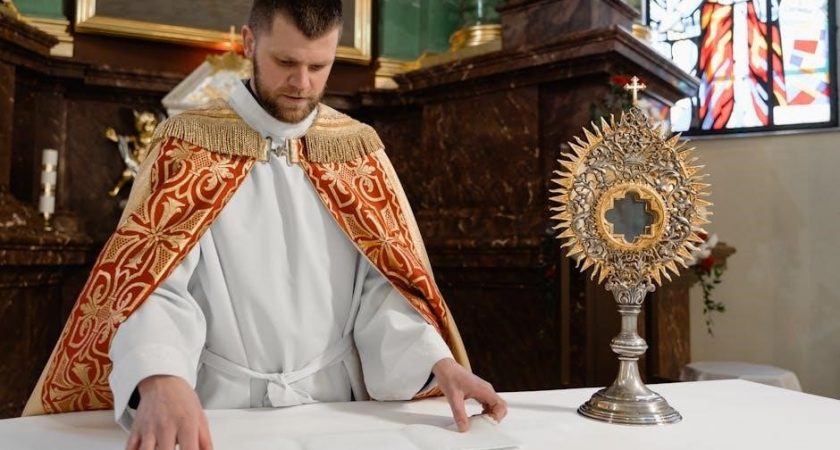
Exploring the Traditional Latin Mass involves accessing resources, and increasingly, PDF formats offer convenient study aids. These digital texts provide the Ordo Missae,
translations, and historical context, facilitating deeper engagement with this ancient liturgical practice.
Historical Context of the Latin Mass
The roots of the Latin Mass stretch back to the early Church, evolving over centuries. Initially, worship practices varied regionally, utilizing Greek and other local languages alongside Latin. However, Latin gradually became standardized, particularly within the Western Roman Empire, solidifying its position as the liturgical language.
By the late Roman Republic, Classical Latin emerged, influencing the development of liturgical texts. The earliest Latin inscriptions date to the 6th century BC, showcasing the language’s ancient origins. As the Roman Empire expanded, so did the use of Latin in religious ceremonies.
Crucially, the standardization facilitated unity across diverse communities. The availability of PDF resources today allows modern study of these historical liturgical forms, offering access to texts reflecting different eras of development. These PDFs connect us to a rich tradition, revealing the evolution of the Mass through time, and providing invaluable insight into its enduring significance.
The Tridentine Mass: A Defining Period
The Council of Trent (1545-1563), responding to the Protestant Reformation, solidified the form of the Latin Mass known as the Tridentine Mass. This period represents a pivotal moment, resulting in a standardized liturgical rite that would remain largely unchanged for centuries.
This standardization aimed to reaffirm Catholic doctrine and practice, providing a clear and unified expression of faith. The Missale Romanum, promulgated by Pope Pius V in 1570, became the definitive text for the Mass.
Today, access to PDF versions of this Missale Romanum is invaluable for scholars and practitioners. These PDF resources allow detailed study of the Tridentine rite, offering insights into its theological underpinnings and precise rubrics. Furthermore, PDFs containing side-by-side Latin-English translations facilitate understanding for those learning the liturgical Latin, bridging the gap between tradition and modern accessibility. The enduring legacy of the Tridentine Mass is now readily available through digital formats.
Understanding the Liturgical Latin Language
Liturgical Latin, rooted in Classical Latin, presents unique pronunciation and vocabulary. PDF resources often include guides to aid comprehension, unlocking the beauty of the Mass’s ancient tongue.
Origins and Evolution of Latin
Latin, an Italic language originating in Latium (modern Lazio, Italy), boasts a rich history stretching back to the 6th century BC, evidenced by the earliest known inscriptions. Initially, “Old Latin” evolved into standardized “Classical Latin” during the late Roman Republic, becoming the language of administration, literature, and ultimately, the Roman Empire.
The spread of Roman influence disseminated Latin throughout Europe, North Africa, and the Middle East. Following the Empire’s decline, Latin didn’t vanish; instead, it transformed into the Romance languages – Italian, Spanish, French, Portuguese, and Romanian – while continuing as the language of scholarship, the Church, and legal systems.
PDF resources dedicated to the Latin Mass often highlight this linguistic evolution, demonstrating how the liturgical Latin used today, while rooted in Classical forms, incorporates elements from Vulgar Latin (the spoken language of the people) and medieval developments. Understanding this historical trajectory enriches appreciation for the Mass’s textual and verbal traditions.
Latin Pronunciation for the Mass
Pronunciation of liturgical Latin differs significantly from Classical Latin, and mastering it is crucial for participating meaningfully in the Traditional Mass. Many PDF guides dedicated to the Latin Mass include detailed pronunciation guides, often employing a reconstructed “Ecclesiastical Pronunciation” developed during the Renaissance.
This pronunciation emphasizes clear vowel sounds and distinct consonants, differing from the more varied pronunciations of Classical Latin. Key aspects include pronouncing ‘c’ before ‘e’ and ‘i’ as ‘ch’ (as in ‘church’), and ‘ae’ as ‘eye’. Vowel length, while important in Classical Latin, is generally less emphasized in Ecclesiastical pronunciation.
PDF missals frequently offer phonetic transcriptions alongside the Latin text, aiding correct vocalization. Online resources, often linked within these PDFs, provide audio examples. Accurate pronunciation isn’t merely about correctness; it enhances the beauty and reverence of the liturgy, fostering a deeper connection to the sacred text.
Key Latin Phrases Used in the Mass
Familiarity with core Latin phrases dramatically enhances understanding and participation in the Traditional Mass. Numerous PDF resources, including Latin-English missals, highlight and translate these essential expressions. Common examples include “Dominus vobiscum” (The Lord be with you), the priest’s frequent greeting, and “Et cum spiritu tuo” (And with your spirit), the customary response.
Other vital phrases include “Gloria in excelsis Deo” (Glory to God in the highest), part of the Gloria, and “Credo in unum Deum” (I believe in one God), the opening of the Creed. PDF study guides often categorize these phrases by liturgical section – Introit, Collect, Epistle, Gospel, and Canon – aiding focused learning.
Understanding the nuances of these phrases, often explained within PDF commentaries, unlocks deeper theological meaning. Learning these key expressions transforms the Mass from a foreign ritual into a profoundly engaging spiritual experience, fostering a more intimate connection with the sacred liturgy.
Accessing Latin Mass PDFs
Numerous online sources provide Latin Mass texts in PDF format, offering convenient access to the Ordo Missae, complete missals, and side-by-side Latin-English translations for study.
Sources for Complete Latin Mass Texts (PDF)
Several websites and organizations specialize in providing complete Latin Mass texts in easily downloadable PDF format. The Internet Archive frequently hosts digitized versions of older missals and liturgical books, offering a wealth of historical resources.
Traditional Catholic publishers, both established and newer, often make PDF versions of their missals available for purchase or free download. Look for resources from publishers dedicated to preserving the Traditional Latin Rite.
Specific websites dedicated to the Latin Mass, such as those affiliated with the Priestly Fraternity of St. Peter (FSSP) or the Institute of Christ the King Sovereign Priest, often provide downloadable PDFs of the Mass texts used in their communities. These are generally reliable and accurately reflect current liturgical practice.
Furthermore, many individual parishes offering the Latin Mass will post the texts for the current Mass on their websites, frequently in PDF form, to assist congregants. A diligent online search, utilizing keywords like “Latin Mass PDF,” “Missale Romanum PDF,” or “Traditional Latin Mass texts,” will yield a substantial number of results.
Ordo Missae PDFs: Order of the Mass
The Ordo Missae, outlining the precise order of the Mass, is frequently available as a PDF download. These PDFs are invaluable for both those assisting at the altar and those following along in the pews, providing a clear roadmap of the liturgical actions.
Different versions exist, reflecting variations in pre-1962 and post-1962 usage, so it’s crucial to select a PDF corresponding to the form of the Mass being celebrated. Many PDFs present the Ordo Missae in Latin alongside an English translation, aiding comprehension.
These resources typically detail each element of the Mass – Introit, Kyrie, Gloria, Collect, Epistle, Gospel, Credo, Offertory, Sanctus, Canon, Pater Noster, Agnus Dei, and Communion – specifying the associated chants, prayers, and rubrics.
Searching for “Ordo Missae PDF” will reveal numerous options, often categorized by feast day or liturgical season. Utilizing a PDF viewer with bookmarking capabilities allows for quick navigation during the Mass, enhancing participation and understanding of the sacred ritual.
Latin-English Missal PDFs: Side-by-Side Translations
Latin-English Missal PDFs are essential tools for those learning to follow the Traditional Latin Mass. These resources present the Latin text alongside its English translation, facilitating comprehension and allowing worshippers to engage more fully with the liturgy.
Numerous publishers offer complete Missals in PDF format, ranging from simple, text-based versions to beautifully formatted editions with musical notation. The side-by-side format is particularly helpful for those unfamiliar with Latin, enabling them to correlate the spoken or chanted words with their meaning.
When selecting a PDF Missal, consider the translation philosophy – some prioritize literal accuracy, while others aim for a more flowing, readable English style. Many PDFs also include explanatory notes and rubrical instructions, enhancing understanding.
Digital Missals offer advantages like searchability and portability, allowing access on tablets or smartphones. Searching for “Latin Missal PDF” yields a variety of options, catering to different preferences and levels of Latin proficiency, fostering a deeper connection to the Mass.
Using PDF Resources for Learning
Digital Latin Mass PDFs empower self-study, offering accessible texts for pronunciation practice and liturgical understanding. They are invaluable for deepening knowledge and participation.
Navigating Latin Mass PDFs Effectively
Successfully utilizing Latin Mass PDF resources requires a strategic approach. Begin by familiarizing yourself with the document’s structure – many PDFs mirror the physical missal layout, with corresponding pages for the priest’s and server’s parts. Utilize the PDF reader’s search function to quickly locate specific prayers, chants, or rubrics.
Bookmarks are incredibly helpful; if the PDF lacks them, consider creating your own to mark key sections like the Introit, Gloria, or Credo. Interactive PDFs may include hyperlinks, allowing seamless navigation between Latin text and English translations.
Zooming capabilities are essential for comfortable reading, especially with older fonts. Annotation tools – highlighting, underlining, and note-taking – facilitate active learning and personal study. Remember to download and save PDFs for offline access, ensuring continued study even without an internet connection. Consistent practice with these techniques will unlock the full potential of these valuable resources.
Tools for Studying Latin within PDFs
Enhancing your Latin study within PDFs requires leveraging digital tools. Online Latin dictionaries, readily accessible in a separate browser window, are invaluable for quick vocabulary lookups while reading the Mass texts. Consider utilizing browser extensions that offer instant Latin-to-English translation, though accuracy should be verified.
Dedicated Latin learning software can be used in conjunction with PDFs; copy and paste phrases for morphological analysis and grammatical breakdown. Some PDF readers allow text selection and direct integration with translation services.
Flashcard applications, like Anki, can be populated with Latin vocabulary and phrases extracted from the PDFs, facilitating spaced repetition learning. Furthermore, online Latin conjugators and declension tools help understand grammatical structures. Remember to actively engage with the text, not just passively translate, to truly grasp the nuances of liturgical Latin within the PDF format.
Benefits of Using PDF Formats for the Latin Mass
PDFs offer significant advantages for studying and participating in the Latin Mass. Their portability allows access to the texts anywhere – at home, in church, or while traveling. PDFs preserve formatting, ensuring the visual layout of the Ordo Missae and other liturgical elements remains consistent.
Search functionality within PDFs enables quick location of specific prayers, chants, or rubrics. Digital annotation tools facilitate note-taking and highlighting key passages for deeper study. PDFs are often freely available, reducing the cost barrier to accessing these resources.
Furthermore, PDFs support both screen reading and printing, catering to different learning preferences. The ability to easily share PDFs fosters collaborative learning within Latin Mass communities. Utilizing PDFs streamlines engagement with the traditional liturgy, promoting a more informed and reverent participation.

Modern Relevance and Availability
Today, the Latin Mass experiences a resurgence, with PDF resources playing a vital role in accessibility. Online communities and digital libraries readily offer these texts for study.
The Resurgence of the Latin Mass
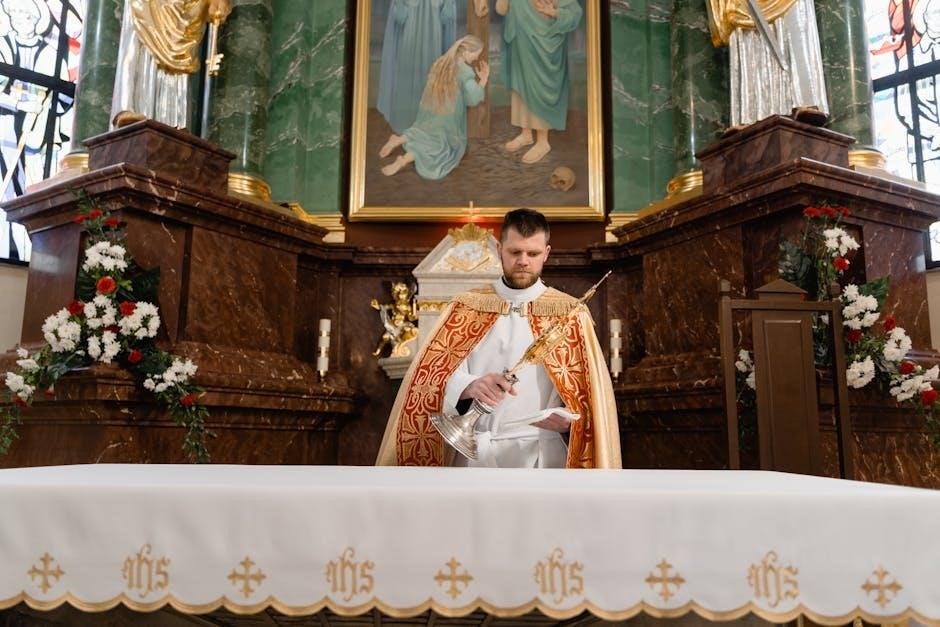
Recent decades have witnessed a notable revival of interest in the Traditional Latin Mass, driven by a desire for liturgical continuity and a deeper connection to the Church’s historical roots. This renewed appreciation has been significantly aided by the increasing availability of resources in digital formats, particularly PDF documents.
Previously, access to the Latin Mass often required physical missalettes or specialized knowledge of the language. Now, comprehensive PDF missals, offering both the Latin text and English translations, are readily downloadable. This accessibility empowers individuals to follow the Mass more closely, even without prior familiarity with Latin. Furthermore, PDF versions of the Ordo Missae – the order of the Mass – allow for detailed study of the liturgical structure.
The proliferation of these digital resources has fostered a more informed and engaged community of Latin Mass attendees. Online forums and websites frequently share and discuss PDF materials, creating a collaborative learning environment. This digital accessibility is a key factor in the ongoing resurgence, making the beauty and solemnity of the Latin Mass available to a wider audience.
Finding Latin Mass Communities and Resources Online
Locating communities offering the Traditional Latin Mass is now significantly easier thanks to online directories and dedicated websites. Many of these platforms also host valuable PDF resources, streamlining access to liturgical materials. Websites like Summorum Pontificum provide comprehensive listings of Latin Mass locations worldwide, often linking to parish websites with downloadable resources.
Furthermore, online forums and social media groups dedicated to the Latin Mass frequently share PDF missalettes, chant guides, and instructional materials. These communities offer a space for questions, discussions, and the exchange of knowledge. Several organizations also provide curated collections of PDF documents, including complete Mass texts, propers for specific feasts, and guides to Latin pronunciation.
The availability of these PDF resources extends beyond simply following the Mass; they facilitate independent study and deeper understanding. Online tutorials and courses often utilize PDF materials, enabling individuals to learn Latin and appreciate the nuances of the traditional liturgy from the comfort of their homes. This digital landscape fosters a vibrant and growing community centered around the Latin Mass.